


 34 / 76

Cahya Mata Sarawak Berhad
32
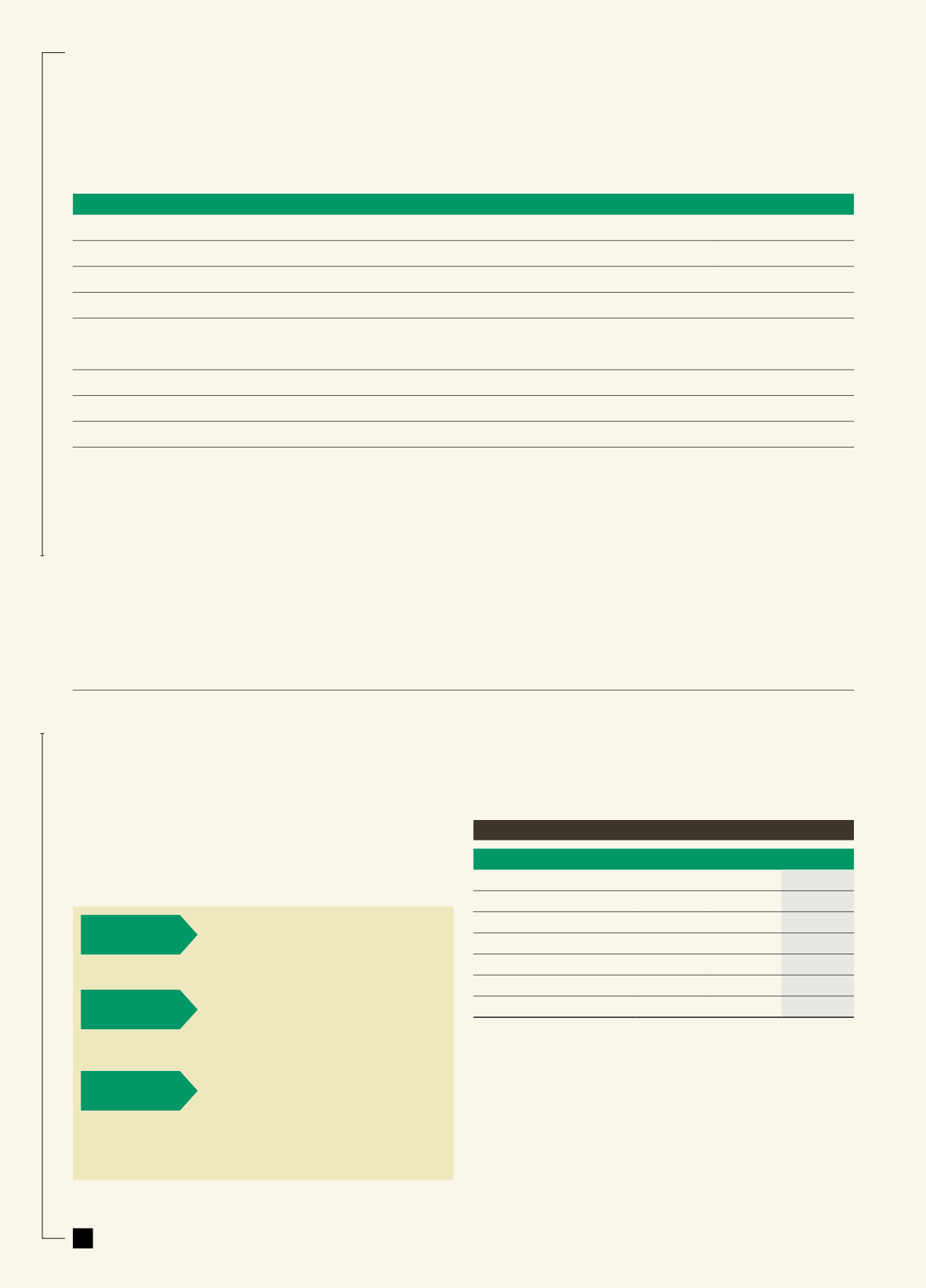
CMS Cement Industries Sdn Bhd under its clinker operation, produces relatively small volumes of scheduled waste. The types of scheduled waste that
is generated and subsequently disposed of are summarised in the table below.
Types of Scheduled Wastes
Waste Code
Contaminated rags, plastics, paper and filters
SW410
Spent oil lubricant and grease
SW421
Contaminated rags
SW410
Contaminated spill kits
SW410
• Containers contaminated with laboratory chemicals
SW409
• Drums contaminated with oil, lubricant and grease
Obsolete laboratory chemicals
SW430
Waste lead batteries in whole or crushed form
SW102
Waste electricals and electronics
SW110
The procedure for handling the scheduled waste is summarised below:
1. The operator ensures all generated scheduled wastes are properly stored in relevant containers.
2. Contaminated parts are cleaned with diesel before being disposed of at the scrap storage area.
3. Once the drum is full, it is transferred to the scheduled waste store. The total quantity of waste is recorded in a record book.
4. The Waste Management Team (WMT) leader submits the records to the DOE on a monthly basis.
5. The WMT calls for disposal of waste 180 days from the date the waste was generated or when the quantity reaches 20 MT, whichever comes first.
PPES Works (Sarawak) adopts stringent scheduled waste practices which are also part of its Environmental Impact Assessment and Environmental
Monitoring Programme. The Company does not produce high quantities of scheduled waste.
The Group does not produce or transport any waste deemed hazardous under the terms of the Basel Convention Annex I, II, III, and VIII.
Short-Term
To improve the highly visible emissions from
the clinker unloading/discharging activities
Medium-Term
To reduce the stacks’ emission lower than
100 µg/m
3
for clinker plants and below
200 µg/m
3
for cement plant stacks
Long-Term
To reduce emission from main stacks below
the stipulated requirements under the
guidelines of Clean Air Regulation 2014 (i.e.
clinker plants below 50 µg/m
3
and cement
plants below 150 µg/m
3
.
AIR EMISSIONS, NOISE, DUST AND VIBRATIONS
In the name of good environmental practices and conscientious
business processes, the Group continues to focus on conducting regular
environment monitoring to keep our practices within the regulatory
standards and to prevent industrial pollution.
CMS Cement Division is continuously focused on controlling their
environmental impact. Their environmental objectives and targets for
the short, medium and long-term can be seen in their emission control
goals listed as follows:
Based on ambient air monitoring at Pending, Bintulu, Sibu Bulk Terminal,
Miri Bulk Terminal and Mambong Integrated Plant, the average Total
Suspended Particles for the Cement Division in 2017 was 95.42 µg/m
3
which was within the Malaysian Recommended Environmental Air
Quality Guidelines of 260 µg/m
3
.
Air Quality Results for Cement Division (µg/m
3
)
Location
2015
2016
2017
Pending Grinding Plant
116.7
76.4
66.0
Bintulu Grinding Plant
197.07
129.3
112.8
Sibu Bulk Terminal
113.77
69.3
68.0
Miri Bulk Terminal
138.6
140.9
163.8
Mambong Integrated Plant
76.51
52.03
36.9
CMS Concrete Products
222.5
198
125.0
Average
144.20 110.99
95.42
Project sites under development by our Property Development Division
are in compliance with Natural Resources and Environment Board,
Sarawak (NREB) guidelines. These are covered in the quarterly monitoring
and reporting submitted by our consultants to NREB.
Environment