


 30 / 62

www.cmsb
.com.myCahya Mata
Sarawak
Berhad
26
WASTE MANAGEMENT
The Group’s commitment to sustainable and ethical
practices encompasses all our operations, not in the least,
our waste management practices. Here at CMS, we take
the practice of collecting and disposing of waste (and
effluents) produced in our plants very seriously. Improper
waste management can potentially have a negative
effect on the community’s health, and similarly it can also
negatively impact the health of the environment. Positive
waste management systems, however, can prevent the
negative impact that waste has on the environment. As
a responsible captain of industry, CMS is committed to
finding innovative and environmentally friendly ways to
re-utilise waste, as well as to dispose of it.
Solid Waste
The disposal of solid waste, i.e. any garbage, refuse,
sludge from a wastewater treatment plant, water supply
treatment plant and other discarded materials stemming
from industrial and commercial operations and from
community activities are discarded in various ways that
are environmentally-friendly.
Our Cement Division produces various solid waste over
its annual production cycle. These consist of wooden
pallets, zinc and acrylic cladding sheets, and old bag
filters of varying sizes, to name a few. The Division does
not record the weight of our solid waste as our focus is
primarily on minimising or eradicating waste.
Recycling where we can, general waste is usually
separated and sold to a third party vendor for reutilisation.
Wood waste is donated to a nearby bricks manufacturing
company and some of the waste components, including
spent oil, are incinerated during clinker production. Used
bag filters, paper bags, torn jumbo and pre-sling bags,
old metal plates, etc. are co-processed at CMS Clinker
Sdn Bhd and sold as scrap.
CMS Wires Sdn Bhd sells its waste iron oxide and scrap
metal to a local steel manufacturer. In 2016, the Company
recycled 23.16 MT of scrap iron and iron oxide.
PPES Works (Sarawak) Sdn Bhd, a company under our
Construction & Road Maintenance Division, re-sells its
leftover construction materials. It also reuses construction
wastes such as timber and formwork, as well as demolition
wastes or broken slabs. Waste paper is recycled for
internal photocopying and printing and some waste from
land clearing is utilised for example as the base of an
access road in a swampy area.
Scheduled Waste
Scheduled waste is any discarded solid, liquid or
contained gas or material that can no longer be used.
As it is hazardous and is difficult to dispose of safely
without special technologies and facilities, we make it a
point to ensure that all scheduled waste is discarded in
compliance with operational regulations. In 2016, some
3,717 litres of waste oil (spent lubricant and hydraulic
oil) classified under SW421 was generated and collected
by a licensed contractor. All materials that had come in
contact with the oil, such as contaminated gloves and
used cotton rags were also properly disposed of as well.
Our Construction & RoadMaintenance Division continues
to take all the necessary measures to ensure that all waste
materials from its project sites are disposed properly. To
this end, the Division has allocated specific landfills for its
scheduled waste, which in 2016, amounted to 280.20kg.
PPES Works (Sarawak) adopts stringent scheduled waste
practices which are also part of its Environmental Impact
Assessment and Environmental Monitoring Programme.
The Company does not produce high quantities of
scheduled waste.
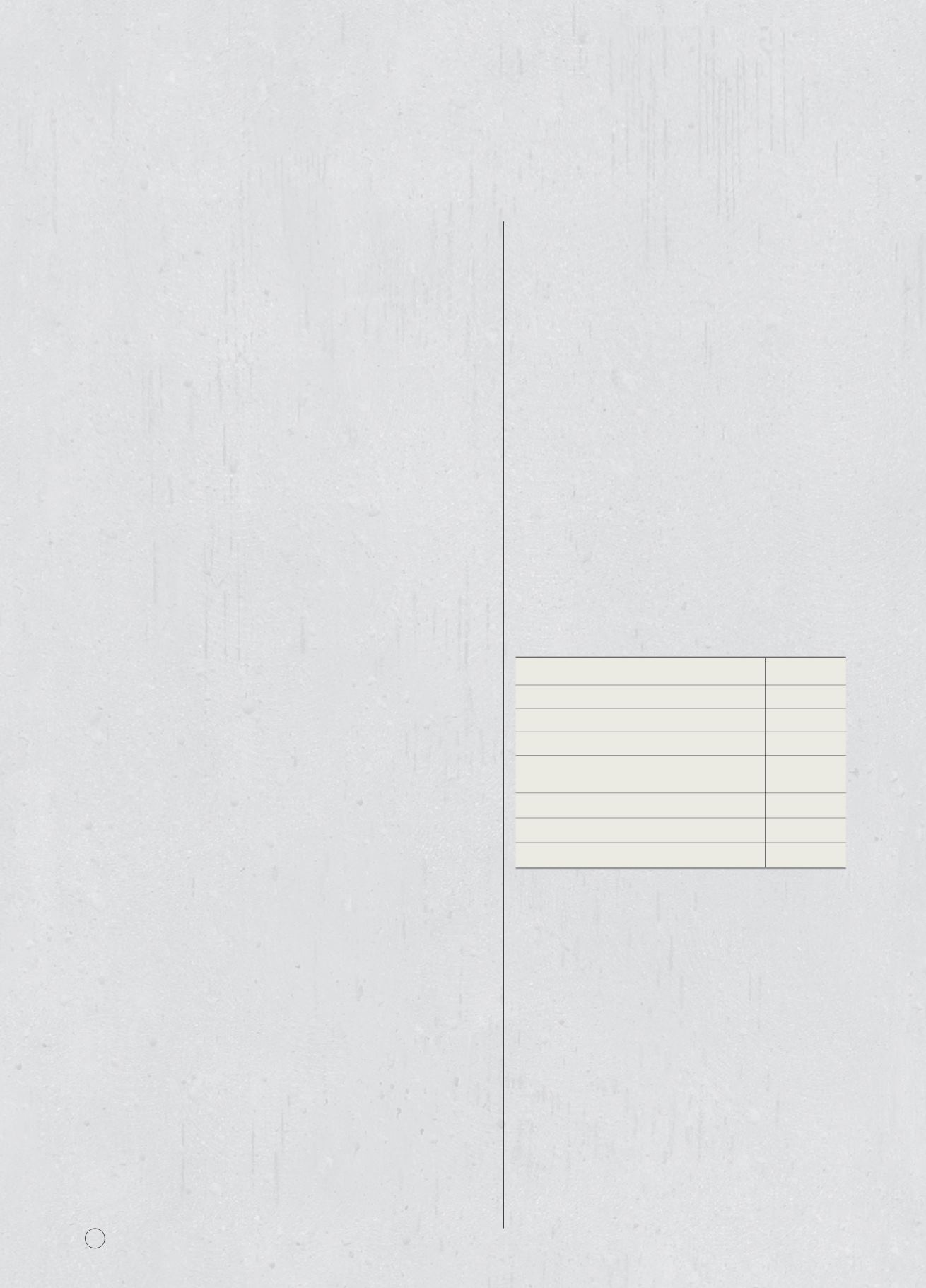
At CMS Clinker, we produce relatively small volumes of
scheduled waste. The types of scheduled waste that are
generated and subsequently disposed of are summarised
in the table below.
Type of Scheduled Wastes
Water Code
Contaminated rags, plastics, paper and filters
SW410
Spent oil lubricant and grease
SW421
Contaminated rags
SW410
Contaminated spill kits
SW410
• Container contaminated with laboratory chemicals
• Drums contaminated with oil, lubricant and grease
SW410
Obsolete laboratory chemicals
SW430
Waste of lead batteries in whole or crushed form
SW102
Waste of electrical and electronic
SW110
The procedure of handling the scheduled waste is
summarised below:
1. The operator ensures all generated scheduled wastes
are properly stored in relevant containers.
2. Contaminated parts are cleaned with diesel before
being disposed of at the scrap storage area.
3. Once the drum is full, it is transferred to the scheduled
waste store. The total quantity of waste is recorded in
a record book.
4. TheWaste Management Team (WMT) Leader submits
the records to the DOE on a monthly basis.
5. The WMT calls for disposal of waste, 180 days from
the date the waste was generated or when the
quantity reaches 20 MT, whichever comes first.
CMS does not produce or transport any waste deemed
hazardous under the terms of the Basel Convention
Annex I, II, III, and VIII.
Environment